
TL;DR: Most batting cages are 12 feet tall, 12 to 14 feet wide, and 35 to 70 feet long. Younger players do fine with a 12-foot-wide cage, while adult players need at least 14 feet of width. When budget is tight, choose a shorter cage with a heavier net over a longer cage with a lighter net.
Batting cages are typically 12 feet tall, 12 to 14 feet wide, and 35 to 70 feet long. For optimal performance, younger players can use a 12-foot-wide cage, while adult players generally require at least 14 feet of width. When budget is a concern, Baseballtips.com recommends prioritizing a shorter cage with a heavier, more durable net over a longer cage with a lighter net, as net quality is crucial for usability and longevity.
How Big Are Batting Cages?
Batting cages are typically 12 feet tall, 12 to 14 feet wide, and anywhere from 35 to 70 feet long. Standard residential and team cages fall within these ranges, though exact dimensions depend on the player’s age, available space, and budget. Any batting cage is the most impactful baseball training equipment a player can have, so the goal is to find a size that fits your space and your wallet without sacrificing net quality.
How Long Is a Batting Cage?
A batting cage is commonly available in lengths ranging from 35 feet to 70 feet. Shorter cages in the 35- to 50-foot range work well for backyard setups and younger players. Longer cages of 55 to 70 feet are used by high school, college, and professional programs that want more distance between the pitcher’s area and the batter. The length of the cage does not affect a player’s development as much as the condition of the net does. A net with holes is unusable, so prioritize net quality over extra footage.
How Long Should a Batting Cage Be?
A batting cage should be as long as your space and budget allow, but net quality matters more than length. If your budget is limited, choose a shorter cage with a heavier, more durable net rather than a longer cage with a lighter net. A shorter cage that holds up for many seasons beats a longer cage with a net that wears out quickly. Also remember to take your net down during the off-season to add years of use.
How Wide Should a Batting Cage Be?
A batting cage should be 12 feet wide for younger players and 14 feet wide for adult-size players. Taller players with longer arms, especially top-hand release hitters, can clip the side netting on their backswing in a 12-foot-wide cage. Where space allows, 14 feet of width is the preferred choice for adult ballplayers. You also need to know that 14-foot-wide frames can hold 12-foot-wide nets, and 16-foot-wide frames can hold both 12-foot and 14-foot-wide nets.
| Width | Best For | Notes |
|---|---|---|
| 12 ft. | Younger players, pre-growth spurt | Fine for smaller athletes; taller hitters may hit the side net on backswing |
| 14 ft. | Adult-size players | Preferred where space allows; fits in a 14 ft. or 16 ft. frame |
| 16 ft. frame | Adult players wanting flexibility | Accepts both 12 ft. and 14 ft. nets |
How Wide Does a Batting Cage Need to Be?
A batting cage needs to be at least 12 feet wide to give a batter safe room to swing without hitting the side netting. That minimum works for younger or smaller players. Adult players need 14 feet of width so their backswing clears the net, particularly if they use a top-hand release. If you have the space, go with 14 feet to avoid frustrating contact with the side netting during practice. Also think about bat weight considerations for players, since a bat that is too heavy slows swing speed and could increase the chance of clipping the netting on a slower, wider arc.
How Tall Should a Batting Cage Be?
A batting cage should be 12 feet tall from ground level, which is the standard height for both frames and nets. This height gives all player sizes enough clearance for a natural swing and for tracking high pitches. Nets are designed to sit with 6 to 12 inches of netting resting on the ground so hard-hit ground balls are captured rather than rolling under the cage.
How Tall Is a Batting Cage?
A batting cage is 12 feet tall, measured from the ground to the top of the frame. Both standard cage frames and their matching nets are built to this 12-foot height. The extra 6 to 12 inches of net that sits on the ground ensures ground balls stay inside the cage and do not escape under the bottom edge.
How Tall Are Batting Cages?
Batting cages are 12 feet tall as a standard across residential and team-level setups. This consistent height means frames and nets from reputable suppliers are built to match each other. When shopping, confirm that the seller accounts for that 6- to 12-inch ground allowance so you know the net was designed to capture ground balls properly.
How Big Is a Batting Cage?
A typical batting cage is 12 feet tall, 12 to 14 feet wide, and 35 to 70 feet long. Backyard cages used for personal practice tend to fall in the shorter range. Team and facility cages lean toward the longer range. You can see full sizing details and options in the portable batting cage selection guide to match dimensions to your specific situation.
What Size Batting Cage Do I Need?
The size batting cage you need depends on three things: the player’s age and size, the space you have available, and your budget. Start by measuring your available space, then match the longest cage that fits. Choose 14-foot width for adult players and 12-foot width for younger players. After you nail down the dimensions that fit your space, focus your remaining budget on net quality rather than extra length. Complete systems, frame-only options, and net-only choices all exist at different price points, so you have room to work within your budget without going cheap on the net itself.
How Big Should a Batting Cage Be?
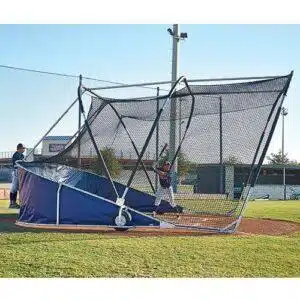
A batting cage should be as big as your available space allows, with a minimum of 12 feet of height and 12 feet of width for any player. Adult players should aim for 14 feet of width. For length, fit the longest cage your space and budget support without stretching past your budget for a lighter net. A shorter cage with a quality, heavier net will give you more years of use than a longer cage with a net that tears or sags quickly. Consider the Big Bubba Elite Batting Cage if you want a full-featured setup, or the budget rolling batting cage for a quality option at a lower price point.
How Much Space Do You Need for a Batting Cage?
You need a minimum footprint of 12 feet wide by 12 feet tall by 35 feet long for the smallest practical batting cage setup. Add extra clearance around the frame on all sides so players and coaches can move safely. If your yard or facility has more room, a longer cage gives pitching machines more distance and makes the experience feel more realistic. Measure your space before you buy, then select the cage that fits inside those measurements with room to spare. If your space changes or you need to move, portable batting cage options make it easy to practice in different locations. You can also add the budget rolling batting cage to your cart if you want a cage you can move and store easily.
Quick Recap
- Standard batting cage height is 12 feet from the ground up.
- Use 12-foot width for younger players; use 14-foot width for adult players.
- Cage length ranges from 35 to 70 feet depending on space and budget.
- A shorter cage with a heavier net beats a longer cage with a lighter net when money is tight.
- Nets sit 6 to 12 inches on the ground to capture hard ground balls.
- 14-foot frames accept 12-foot nets; 16-foot frames accept both 12-foot and 14-foot nets.
- Take your net down in the off-season to extend its life.
- Buy from specialists you can actually speak with. You do not want to buy this twice.
- Consider bat weight alongside cage selection. Read up on bat weight considerations for players to complete your setup.
Frequently Asked Questions
What is the standard size of a batting cage?
The standard batting cage is 12 feet tall, 12 to 14 feet wide, and 35 to 70 feet long. These dimensions apply to both residential backyard cages and team-level setups.
Can a 14-foot frame use a 12-foot net?
Yes. A 14-foot-wide frame can hold a 12-foot-wide net. A 16-foot-wide frame can hold both 12-foot and 14-foot-wide nets, giving you flexibility if you upgrade later.
Is a 12-foot-wide batting cage wide enough for adults?
It can work, but 14 feet is the preferred width for adult players. Taller hitters with longer arms, especially top-hand release hitters, often hit the side netting on their backswing in a 12-foot-wide cage.
Does batting cage length affect a player’s development?
No. Cage length does not affect a player’s development. Net quality matters far more. A cage with holes in the net is unusable, so prioritize a heavier, more durable net over extra length when working with a limited budget.
How do I maintain my batting cage to make it last longer?
Take the net down during the off-season whenever the cage is not in regular use. This single step adds years of life to the net and keeps your investment in good shape.
Should I buy a batting cage from a sporting goods store?
No. Buy from specialists who focus on batting cages and can answer your specific questions. Sporting goods stores and discount stores do not offer the same level of product knowledge or support.
What if I need to move my batting cage to different locations?
A portable or rolling batting cage solves this problem. You can find details on portable options in the portable batting cage selection guide.
Ready to Choose the Right Cage?
Measure your space, decide on width based on player age and size, and then pick the longest cage a quality net budget will allow. If you have questions, call (800) 487-7432 between 10am and 7pm EST to speak with someone who specializes in these products. Browse the Big Bubba Elite Batting Cage for a full-featured option, or check out the budget rolling batting cage for quality at a lower price. Remember: you do not want to buy this twice.