The Complete Guide to Choosing Baseball Bases for Your Field

Choosing the right baseball bases for your field seems simple until you start looking at options. Hollywood bases, Bolco bases, breakaway bases, throwdown bases, safety bases—the terminology alone is enough to make your head spin. 

After 25+ years supplying equipment to high schools, colleges, and pro teams, I’ve seen programs waste money on the wrong bases. I’ve also seen smart athletic directors stretch their budgets by choosing exactly what they need, nothing more and nothing less. 

This guide breaks down everything you need to know to make the right choice for your program. What you’ll learn: 

  • The different types of baseball bases and when to use each 
  • How to choose bases by age group and competition level 
  • Material construction and what actually matters 
  • Installation requirements and costs 
  • Maintenance and expected lifespan
  • Budget planning and where to save money

Let’s start with the basics.


📚 Table of Contents

  1. Understanding Baseball Base Types
  2. Choosing Bases by League Level
  3. Material Construction: What Matters
  4. Installation Requirements & Costs
  5. Maintenance & Lifespan
  6. Budget Planning Tips
  7. Common Problems & Fixes
  8. Essential Accessories
  9. Frequently Asked Questions
  10. Making Your Decision
  11. Where to Buy Quality Bases
  12. Final Thoughts

🥇 Understanding Baseball Base Types

1. Hollywood/Bolco Style Bases (Standard Competition Bases) 

Those are name brands that cost too much, since I have discovered that no one recalls the brand after the purchase. There are now a few high-end manufacturers who avoid the big-name markups. This is the style, not necessarily the brand, of what you see on most competitive fields from high school up through the pros. 

What they are: 

  • Heavy rubber surface moulded over foam or solid core 
  • Metal pan/stanchion on bottom for ground anchoring 
  • Official 15″ x 15″ x 3″ dimensions (MLB now uses 18” x 18” x 3”)
  • Typically weigh 10-15 pounds 

Best for:

  • High school baseball 
  • College programs (D1, D2, D3) 
  • Competitive travel ball 
  • Professional and semi-pro leagues 

Heavy use tournament fields

Pros: 

  • Durable construction lasts 5-10+ years 
  • Stable in the ground with proper anchoring 
  • Weather-resistant 
  • Official size for sanctioned play 

Cons: 

  • Higher initial cost ($250-490 per set) 
  • Require proper installation 
  • Need anchors and maintenance 
  • Heavier to move 

Quality indicators to look for: 

  • Bolted or welded metal pan  
  • Heavy-duty rubber surface (not thin vinyl) 
  • High-density foam core 
  • Rust-resistant coating on metal 

2. Breakaway Safety Bases 

These bases detach from their anchors when a runner slides into them, reducing ankle and knee injuries. What they are: 

  • Same size as standard bases 
  • Special anchor system allows base to release under pressure 
  • Automatically reattaches after play 

Best for:

  • Youth leagues prioritizing safety 
  • Multi-use recreational fields 
  • Programs with injury concerns 
  • Leagues requiring safety bases 

Pros:

  • Reduces sliding injuries by up to 95% 
  • Meets safety requirements for many leagues 
  • Same appearance as standard bases 
  • Easy to reset after detachment 

Cons: 

  • More expensive ($250-500 per set) 
  • More complex installation 
  • Requires specific anchor system 
  • May detach during normal play occasionally 

Research shows: Fields with breakaway bases have 80-95% fewer base-sliding injuries compared to stationary bases. 


3. Double First Base Systems 

These use a contrasting-colour base (typically orange) in foul territory alongside the white base in fair territory. 

What they are: 

  • Two bases side-by-side at first base 
  • Runner uses orange base, fielder uses white 
  • Reduces collisions between the runner and the first baseman 

Best for: 

  • Youth leagues (especially 8-12 years old) 
  • Recreational softball
  • USA Baseball – including LL World Series
  • High School Baseball (beginning 2027)


  • NCAA College Baseball & Fastpitch
  • Programs emphasising safety 
  • High-traffic recreational fields 

Pros:

  • Dramatically reduces first-base collisions 
  • Easy to understand and implement 
  • Minimal cost increase 
  • Required in some youth leagues 

Cons: 

  • Only solves first-base issue 
  • Can confuse younger players initially 
  • Requires two bases instead of one 

4. Throwdown Practice Bases
Portable rubber bases sit on top of the ground without anchoring.


What they are: 

  • Heavy solid rubber construction 
  • No metal pan or anchor needed 
  • Typically 15″ x 15″ but lower profile (1-2″ thick) 
  • Weight keeps them in place 

Best for: 

  • Practice and training 
  • Indoor facilities 
  • Gym classes and PE programs 
  • Temporary fields (wiffle ball, etc.) 
  • Budget-conscious programs 

Pros: 

  • Very affordable ($30-90 for set of 3) 
  • No installation required 
  • Portable and easy to store 
  • Work on any surface 
  • Great for multi-purpose spaces


Cons: 

  • Can move during aggressive sliding 
  • Not suitable for competitive games 
  • Wear faster than permanent bases 
  • Lower profile feels different 

Pro tip: Many programs use throwdown bases for practice and save their competition bases for games only. This extends the life of both sets. 


5. Waffle-Bottom Bases 

These are not overly popular except when used for buried home plates. They feature a honeycomb rubber bottom that provides grip without requiring metal anchors. 
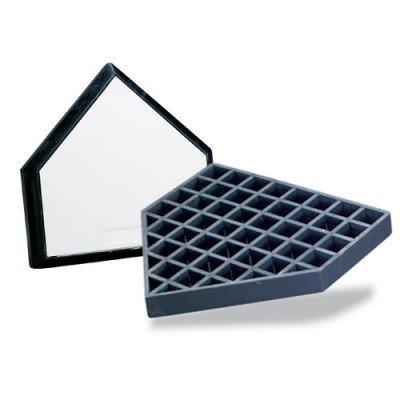
What they are: 

  • Solid rubber construction throughout 
  • Textured waffle pattern on bottom 
  • Lighter weight than Hollywood-style 

Best for: 

  • Youth fields with hard-packed dirt 
  • Temporary or portable fields 
  • Budget programs 
  • Fields without proper drainage 

Pros: 

  • No metal pan to rust 
  • Lighter weight (easier to move) 
  • Less expensive than Hollywood bases 
  • Good for problematic soil conditions 

Cons:

  • Can shift more than anchored bases 
  • Shorter lifespan than heavy-duty options 
  • Not as stable in loose dirt 
  • May not meet requirements for higher levels 

⚾ Choosing Bases by League Level

The right bases depend on who’s playing on your field. Here’s what I recommend: 

Youth Recreational (Ages 8-12) 

Base path distance: 60 feet 

Recommended bases: 

  • First choice: Standard pro style bases with ground anchors 
  • Budget option: Quality throwdown bases 
  • Safety-first option: Breakaway bases or double first base 

Why: At this level, safety and affordability matter most. Kids are learning proper sliding, so injury prevention is important. That said, you want them practising on bases that feel similar to what they’ll use in competitive play. 

Budget: $90-490 per set 

Travel Ball / Competitive Youth (Ages 10-14) 

Base path distance: 70-80 feet (varies by age) 

Recommended bases: 

  • First choice: Pro-style bases with rustproof pans & ground anchors
  • Add: Breakaway option if league requires 

Why: These programs play 50-80 games per season on multiple fields. You need bases that travel well and hold up to heavy use. Players are more skilled, so standard anchored bases work fine. 

Budget: $250-490 per set 

High School (Ages 14-18)

Base path distance: 90 feet 

Recommended bases: 

  • Required: Professional-grade bases 
  • Quality level: Rustproof steel pan, heavy rubber surface 
  • Features: Rust-resistant coating, high-density core 

Why: High school fields get used daily during the season – practice, games, multiple teams. Cheap bases will fail within 2-3 years. Quality lasts 8-10 years, making them cheaper in the long term. 

Budget: $250-490 per set 

League requirements: Most state associations have specifications. Check your state’s NFHS requirements. 

College Baseball (All Divisions) 

Base path distance: 90 feet 

Recommended bases: 

  • Required: Heavy-duty professional bases 
  • Quality level: Rustproof steel pan construction, industrial rubber 
  • Features: Maximum weight, weather-resistant 

Why: College fields take incredible abuse – fall ball, spring season, summer leagues. You need bases built like tanks. D1 programs often have 2-3 sets they rotate to extend life. 

Budget: $300-500 per set 

NCAA requirements: Bases must meet specific standards for sanctioned play. Verify compliance before purchasing. 

Professional / Semi-Pro 

Base path distance: 90 feet 

Recommended bases: 

  • Required: Top-tier professional bases only 
  • Quality level: Heavy-duty rustproof steel pan, premium materials 
  • Features: Maximum durability, consistent feel

Why: Pro teams play 100+ games. Bases need to perform identically every game. Budget isn’t the issue – consistency and durability are. 

Budget: $400-600+ per set 


🧱 Material Construction: What Actually Matters 

Understanding how bases are built helps you spot quality and avoid junk. 

Surface Material 

Heavy Rubber (Best): 

  • Thick, durable outer layer 
  • Resists cleat damage 
  • Maintains grip when wet 
  • Lasts 8-10+ years 
  • What pros use 

Standard Rubber: 

  • Adequate thickness 
  • Good for most programs 
  • Lasts 5-7 years 
  • Good value for high school 

Vinyl Cover (Avoid): 

  • Thin outer layer 
  • Tears easily with cleat contact 
  • Degrades in sun/weather 
  • Cheap appearance 
  • Won’t last 2 full seasons 

Core Construction 

High-Density Foam (Best):

  • Firm but has some give 
  • Absorbs impact better 
  • Maintains shape over time What you want for competition 

Standard Foam: 

  • Adequate cushioning 
  • Good for youth/rec leagues Less expensive 
  • Acceptable for practice bases Solid Rubber: 
  • Very firm feel 
  • Extremely durable 
  • Heavier 
  • Used in some throwdown bases 

Metal Pan/Stanchion 

Rustproof Steel Pan: 

  • Stronger and more durable Rust-resistant coating 
  • Worth the extra cost 

No Metal Pan (Throwdown bases):

  • Just rubber construction 
  • For practice/portable use only 
  • Not suitable for games 

🛠️ Installation Requirements and Costs 

Installing bases correctly makes a huge difference in performance and safety. 

DIY Installation 

What you need: 

  • Ground anchors (included with some base sets) 
  • Post hole digger or auger 
  • Tape measure (100+ feet) 
  • Level 
  • Dirt tamper 
  • Plugs to keep dirt out of anchors
  • Base digger tool to remove dirt from anchors


Time required: 2-4 hours for first-time installation 

Difficulty: Moderate – careful measuring is critical 

Cost: $0 (if you do it yourself) plus tools if needed 

When to DIY: 

  • Youth/rec league fields 
  • Practice fields 
  • Temporary installations 
  • Budget-conscious programs 

Professional Installation 

What they do: 

  • Precise measurement of base paths 
  • Proper anchor depth and alignment 
  • Level installation 
  • Final adjustment and testing

Time required: 1-2 hours 

Cost: $200-500, depending on field conditions 

When to hire a pro: 

  • New competition fields 
  • Tournament facilities 
  • College/pro installations 
  • Rock or difficult soil 
  • When precision matters most 

Ground Anchors 

These are the metal sleeves that go in the ground and hold your bases. 

Standard depth: 15-18 inches 

Important: Anchors must be perfectly level. An uneven base is a tripping hazard and doesn’t perform correctly. 

Pro tip: Buy extra ground anchors. Many multi-use fields need multiple sets at different base path distances (60′, 70′, 80′, 90′). It’s much easier than moving bases. 

Base Plugs 

When bases aren’t in use, you need plugs to keep dirt out of your ground anchors. 

Why they matter: 

  • Prevent dirt and debris from filling anchors 
  • Stop water accumulation 
  • Make base removal easier 
  • Extend anchor lifespan 

Cost: $25-40 for set of 3 

Don’t skip these: Cleaning out clogged anchors is miserable. Buy the plugs. Their are a few different style with the rubber mushroom heads being the most durable but the whisk broom feather-types being easiest to see from a distance.


🧽 Maintenance and Expected Lifespan 

Proper care extends base life significantly. 

Regular Maintenance 

After Every Game:

  • Remove bases if not used daily Install base plugs 
  • Wipe off dirt and mud 
  • Check for damage or loose parts Weekly: 
  • Clean bases with mild soap and water Check anchor tightness 
  • Inspect for wear or damage 
  • Verify bases are level 

Monthly (In-Season): 

  • Deep clean with appropriate cleaner Check anchor integrity 
  • Rotate bases if you have multiple sets Tighten any loose components 

Off-Season: 

  • Remove from field and store indoors Clean thoroughly 
  • Inspect and repair any damage Store in cool, dry location
  • Leave anchors & plugs in the field

Expected Lifespan 

Professional Heavy-Duty Bases: 

  • 10+ years with proper care 
  • 5-10 years with moderate care Used in HS, college & pros 

Standard Hollywood Bases: 

  • 6-8 years with proper care 
  • 4-6 years with moderate care 
  • Good for high school and travel ball

Budget/Recreational Bases: 

  • 4-6 years with proper care 
  • 2-4 years with moderate care 
  • Adequate for youth leagues 

Throwdown Practice Bases: 

  • 3-5 years outdoor use 
  • 5-8 years indoor use 
  • Depends heavily on sliding frequency 

Signs It’s Time to Replace 

  • Rubber surface is torn or cracking 
  • Core is compressed or misshapen 
  • The metal pan is rusted through 
  • Bolts won’t tighten (bolted bases) 
  • Bases don’t sit level in anchors 
  • Excessive wear from cleats 
  • Doesn’t meet league safety standards 

Pro tip: Don’t wait until bases fail during a game. Inspect at the start of the season and budget for replacement.

💰 Budget Planning: Where to Save and Where to Splurge 

Smart programs maximize their equipment budgets without sacrificing safety or quality. 

Where to Splurge 

Competition game bases: This is not the place to save money. Buy quality bases that will last 8-10+ years. The cost difference between mid-grade and top-grade is typically $100-200, but you get 3-5 extra years of use. 

Proper anchors: Don’t skimp on anchor systems. Quality anchors properly installed prevent 90% of base problems. 

Installation (if needed): Poorly installed bases are dangerous and won’t last. If you’re not confident in your measurements, hire a pro for competition fields. 

Where to Save

Practice bases: Buy throwdown bases for daily practice. Save your competition bases for games only. This alone can double the life of your game bases. 

Storage: Make space to store bases indoors instead of leaving them out year-round. This adds 30-50% to lifespan. 

Bulk purchases: If you’re buying for multiple fields, negotiate. Most suppliers offer discounts on 3+ sets.
Call us to discuss @ BaseballTips.com 770-487-9798

Accessories: Best to purchase multiples of anything you can budget.
Here’s our most popular base set. It ships complete with bases, ground anchors and base plugs. An extra set of anchors & plugs is well worth having on hand. They are small pieces and tend to disappear over time. 

Cost Comparison: 5-Year Ownership 

Cheap Bases ($80 set): 

  • Replace every 2 years 
  • 5-year cost: $200 (2.5 sets) 
  • Time wasted on failures and replacement 

Quality Bases ($250- 490. set): 

  • Replace once in 5 years (maybe) 
  • 5-year cost: $250 (1 set) 
  • No mid-season failures 
  • Better playing experience 

✅ Quality bases actually cost less over time.


🧩 Common Base Problems and Solutions 

Problem 1: Bases Coming Loose 

Causes: 

  • Anchors installed too shallow 
  • Poor soil conditions 
  • Wrong anchor type for soil 
  • Bases not seated properly (dirt inside the anchor)

Solutions:

  • Install anchors deeper 
  • Use expansion anchors in sandy soil  
  • Consider concrete anchors in unstable ground Make sure bases are fully seated before play 

Problem 2: Bases Sitting Uneven Causes: 

  • Anchor not installed level 
  • Dirt buildup in anchor 
  • Damaged anchor 
  • Base pan warped 

Solutions: 

  • Check anchor with level during installation Clean anchors regularly, use plugs 
  • Replace damaged anchors immediately Inspect bases before each season 

Problem 3: Rapid Wear and Damage Causes: 

  • Low-quality materials 
  • Excessive sliding practice 
  • Left out in the weather year-round 
  • No rotation of multiple sets 

Solutions: 

  • Buy quality bases from the start 
  • Use throwdown bases for sliding practice & travel
    Remove and store when not in use 
  • Rotate 2-3 sets if possible

Problem 4: Rust on Metal Pans 

Causes: 

  • Poor coating or cheap metal 
  • Constant moisture exposure 
  • No off-season storage 

Solutions: 

  • Buy rust-resistant coated bases 
  • Remove from the field after the season 
  • Store indoors in a dry location 
  • Consider rust-resistant spray coating 

🧺  Accessories You Actually Need

Essential Accessories 

1. Ground Anchors 

  • Included with some base sets, but buy extras Allow multiple base path distances on one field Cost: $70-190 per set of 3 
  • Buy: When setting up new field or multi-use fields

2. Base Plugs

  • Keep dirt out of anchors 
  • Prevent water accumulation 
  • Cost: $60-90 per set 
  • Buy: For every field, no exceptions

3. Dig-Out Tool 

  • Removes bases from tight anchors 
  • Prevents damage when removing bases Cost: $20-35 
  • Buy: 1-2 per facility 

Nice-to-Have Accessories

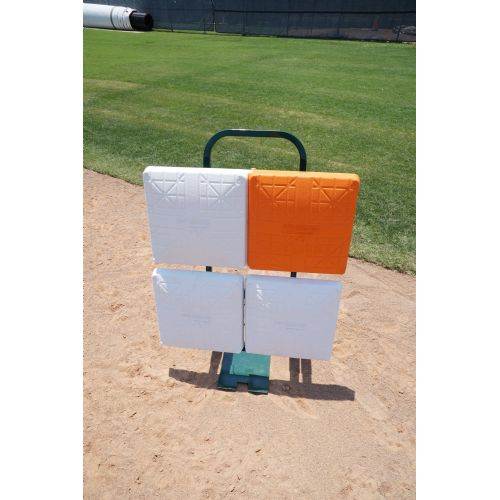
4. Base Cart 

  • Holds all bases plus dugout tool
    3 base cart 4 base cart
  • Makes transport and storage easier 
  • Cost: $350-490 
  • Buy: If you move bases daily or have multiple fields

5. Replacement Parts 

  • Anchors
  • Base Plugs (feather tipped or mushroom cap styles) 
  • Buy: Keep a few basics in stock

6. Storage Bag 

  • Protects bases during transport 
  • Keeps sets organized 
  • Cost: $40-80 (frankly, find an old baseball bag with handles) 
  • Buy: For travel ball programs (mostly applies to our heavy throwdown bases)

❓ Frequently Asked Questions

Q: What’s the difference between Hollywood and Bolco bases? 

A: They’re essentially the same thing – both are brand names for the standard anchored base style used in competitive baseball. The term “Hollywood bases” comes from the Hollywood Bases brand that popularized this design in the 1960s. Today, multiple manufacturers make this style, and they all work the same way.
Here’s our money-saving complete pro set – name brands don’t improve your on-base percentage, but cheapies can ruin your day.

Q: Do I need breakaway bases for my youth league? 

A: It depends on your league’s requirements and your budget. Research shows breakaway bases reduce sliding injuries by 80-95%. If player safety is a concern and you have the budget, they’re worth considering for ages 12 and under. However, standard properly-installed bases are safe for most youth programs. 

Q: Can I use softball bases for baseball? 

A: Yes, bases are the same for both sports – 15″ x 15″ x 3″. The difference is in the field dimensions (base paths), not the bases themselves. One set works for both softball and baseball.

Q: How deep should base anchors be installed? 

A: Professional installations typically go 15-18 inches deep. This provides proper stability and ensures bases sit at the correct height above ground level. Shallow installation (under 12 inches) causes bases to come loose and can be dangerous. 

Q: How long do baseball bases typically last? 

A: It depends on quality and usage: 

  • Professional heavy-duty: 5-15 years 
  • Standard bases: 2-5 years 
  • Budget recreational: 2-4 years 
  • Practice throwdown: 3-6 years 

Proper maintenance (removing the field, storing indoors) can add 30-50% to these lifespans. 

Q: What causes bases to come loose during play? 

A: Common causes include: 

  • Anchors installed too shallow 
  • Poor soil conditions (sand or very loose dirt) 
  • Dirt buildup in the anchor may be preventing the base from seating fully 
  • Worn or damaged anchors needing replacement 
  • Wrong anchor type for your soil conditions 

Q: Are expensive bases worth the extra money? 

A: Yes. Good and cheap don’t go together!
Quality bases often cost 40-60% more upfront but last 2-3 times longer. Over 5-10 years, they’re actually cheaper. More importantly, they perform consistently and don’t fail mid-season when you need them most. 

Q: Can I install bases myself, or should I hire someone? 

A: DIY installation is fine for practice fields, youth leagues, and recreational use – as long as you’re careful with measurements. For competition fields (high school+), consider (but don;t say yes, automatically to hiring a professional. The $300-500 cost ensures proper installation and prevents problems that cost more to fix later. But, I think this project is within most handymen’s abilities!

Q: Do I need base plugs? 

A: Yes, absolutely. Base plugs are cheap enough and prevent dirt from filling your anchors. Without them, you’ll spend hours cleaning out anchors (a tedious job) and may need to replace them prematurely. Every field needs base plugs. 

Q: How do I measure base paths correctly? 

A: Base paths are measured from the back corner of home plate to the far corner of each base: 

  • Youth: 60 feet 
  • Intermediate: 70 feet 
  • High School/College/Pro: 90 feet 

Other than pro baseball, all bases are 15″ x 15″, so the back corner of one base to the back corner of the next measures the official base path distance. 

Q: Should I remove bases between games? 

A: It depends: 

  • Daily use (practice + games): Can leave in if using base plugs when not in use 
  • Weekly use: Should remove and store 
  • Off-season: Definitely remove and store indoors 
  • Tournament fields: Remove between events 

Removing extends lifespan but requires proper storage. Use base plugs if leaving them in the ground.
Buying a base cart is an excellent idea, as bases take up too much room, especially when they’re on the ground or on a shelf.

Q: What if my field has multiple base path distances? 

A: Buy multiple sets of ground anchors. It’s much easier (and better for the bases) than moving them. Install anchors at each distance you need:

  • Example: 60′, 70′, and 90′ anchors all installed 
  • Use base plugs in the unused anchor sets 
  • Move bases to appropriate anchors for each age group 
  • Cost: $70-190 per additional anchor set (worth it – don’t buy cheaper!) 

Q: Are your bases approved for sanctioned play? 

A: Our pro-grade baseball bases meet NFHS and NCAA requirements for dimensions and construction. They’re used by 500+ high school and college programs nationwide. Always verify your specific league’s requirements, as some have additional specifications. 


🧭 Making Your Decision

Here’s a simple decision tree to help you choose: 

Step 1: Determine your level 

  • Youth rec (8-12): Budget or standard bases 
  • Competitive youth/travel: Pro-style bases are still recommended 
  • High school: Pro-style bases 
  • College/Pro: Heavy-duty pro-style bases 

Step 2: Set your budget 

  • Entry level: $80-150 
  • Mid-range: $150-250 
  • Pro-grade: $250-500+ 

Step 3: Add necessary accessories 

  • Ground anchors (if not included) 
  • Base plugs (essential) 
  • Dig-out tool (highly recommended) 
  • Base cart (optional but helpful) 

Step 4: Plan for installation 

  • DIY: Save money, takes 2-4 hours 
  • Professional: $300-500, recommended for competition fields

Step 5: Budget for maintenance 

  • Storage space (garage, shed, equipment room) – get a base cart!
  • Cleaning supplies 
  • Eventual replacement (5-10 years) 

🛒 Where to Buy Quality Baseball Bases

We’ve been supplying baseball programs since 1999, and our bases are used by 500+ high schools, colleges, and pro teams across the country. 

Why programs choose us: 

  • Professional-grade bases at competitive prices 
  • Heavy rubber surfaces that last 
  • Free quick shipping to schools and facilities 
  • Expert advice from former coaches 
  • 2-year warranty 
  • Tax-exempt and PO orders welcome 

View our complete selection of baseball bases, from youth throwdown bases to professional heavy-duty sets. 

Need help choosing? Call us at 1-800-487-7432 (M-F, 10 am-7 pm EST). Our team of ex-coaches will help you find exactly what your program needs without the sales pressure. 

We also carry everything else you need for your field: 

📞 Call 1-800-487-7432 (M–F, 10am–7pm EST) or view all baseball bases here.


🧤 Final Thoughts

Choosing baseball bases isn’t complicated once you understand the basics. Focus on three things:

  1. Buy the right quality for your level – Don’t overpay for features you don’t need, but don’t cheap out on competition fields. Buy up to your budget without going cheap or blowing a hole through it! 
  2. Install properly – Correct installation matters more than most people realize. Take your time or hire a pro. 
  3. Maintain consistently – Remove when not in use, store properly, and use base plugs. This simple maintenance doubles lifespan. 

The right bases make your field safer, look more professional, and last long enough to be a smart investment. The wrong bases cost you money, time, and potentially player safety. 

Questions about your specific situation? Give us a call at 1-800-487-7432. We’re here to help. 


I hope this has helped you!

john pero aka coach JP
coach jp

Since 1999, Baseball Tips has been helping coaches and athletic directors make smart equipment decisions. We don’t just sell equipment – we help you build better programs.

Baseball Tips
Blog Menu

About Baseball Tips

Since 1999, BaseballTips.com is our way of helping coaches, athletic directors and departments charged with creating & maintaining  winning programs.

We truly appreciate your support!  Browse our quality baseball equipment, let us help you with a quote, or give us a call with any questions.