At one time or another, a pitcher can have a tired or stale arm. This can happen on the youth level just as it happens on the professional level.
Pitching burnout in baseball, particularly among youth players, results from overexertion and can lead to arm fatigue or injury, exacerbated by relaxed pitching rules and longer seasons. To prevent this, managers and parents should prioritize proper warm-up routines and strictly monitor pitch counts over innings pitched. For example, the American Sports Medicine Institute recommends a maximum of 68 pitches with two days recovery for 11-12 year-old pitchers. Emphasizing a player's long-term health and coordinating with coaches in dual leagues are crucial steps to avoid over-pitching.
In youth baseball, pitchers are even more susceptible, especially during All-Star time if pitching rules are relaxed and pitchers are able to pitch more innings. There are a number of things a manager and parents can do during the season so as to not burn out, or even possibly injure, a pitcher’s arm.
Loosening up is very important before a pitcher throws one pitch. The expression “warm up to pitch, don’t pitch to warm up” is very relevant. For example, if you have ever noticed the great relief pitcher for the New York Yankees, Mariano Rivera. When he is called on to pitch, he goes through a stretching and loosening up routine for five or ten minutes before he even picks up a ball.
During the regular season, managers, coaches and even parents should pay more attention to a player’s pitch count rather than the number of innings pitched. Every player is different, but the manager should use some sort of guideline to determine how many pitches are enough for a particular player.
A few years ago the American Sports Medicine Institute did a study sending surveys to orthopedic surgeons and coaches around the country. They recommended for 11-12 year-old pitchers a maximum of 68 pitches with two days recovery. This might seem very conservative. The study also stated that conditioning of the arm and entire body can reduce injury.
Another issue facing the youth baseball pitcher is dual leagues, or playing for his school and an outside league. It is always a good idea for the manager to make contact with the school coach. Let him know that you understand that the school team is the priority and that you want to be aware of how much the player is pitching. Responsible school coaches should be able to give you the amount of innings and pitch count for a player throughout the season.
Baseball seasons are increasing in length at the youth league level. All-Star games and the popularity of Fall Baseball all add up. There is potential for pitchers to do harm to their arms. Loosening up and stretching are a must.
It is up to the manager, coaches and parents to look out for the long-term interest in their player, rather than over-pitching him to win one particular game.
|
Marty Schupak is an active member of the American Baseball Coaches Association. He founded the Youth Sports Club, which is devoted solely to the improvement of youth sports, and his instructional videos on youth baseball are recommended by the National Alliance of Youth Sports, the largest amateur coaching training organization in the country. Schupak has a Master’s Degree in Physical Education from Arizona State University and his youth baseball teams have won championships year after year. |
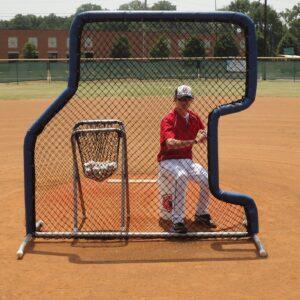 Versatile Baseball Pitching Screen For BP, Toss Drills & Fastpitch!Price range: $620.00 through $840.00
 Pitching Pro L Screen with Wheel Kit | 5′ Wide x 7′ Tall$770.00
Product on sale TriFold Screen & Temporary Backstop | Wheels Included!Original price was: $590.00.$540.00Current price is: $540.00.