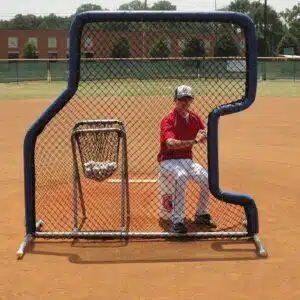

It seems that many players and coaches recognize how little time is allocated during practices for baseball catchers to work on their baseball catching skills, like blocking, exchange drills, pickoff throws, and proper handling of passed balls with a throw to the pitcher covering home plate, just to name a few.
The "20 most wasted minutes" in a baseball catcher's life often occur during infield practice when the starting catcher is primarily engaged in catching throws from fielders and returning the ball to the coach. This time is inefficiently used, preventing catchers from developing crucial skills such as blocking, exchange drills, and pickoff throws, which are vital for game situations. To optimize this period, coaches can assign another player to the catcher's role during the initial phase of infield practice, allowing all catchers to dedicate this time to specialized skill development. This approach ensures catchers receive essential practice, a need highlighted by experts like Dave Weaver, who founded The New England Catching Camp in 1994 to address the lack of specialized catcher instruction.
Often times it has been said to me that there just isn’t enough time to fit it in a practice. I would like to challenge that idea by pointing out the 20 most wasted minutes in a catcher’s life.
The time is called “Infield Practice.” I’ve lost count of how many practices I have observed where a coach is hitting infield practice with oftentimes the starting catcher standing beside them taking the throw from the fielders and then handing the ball back to the coach. WHAT A WASTE!!!
Now I know that some of the items covered during infield practice do require the catcher’s involvement in a true game situation play. However, I have seen at least 20 minutes go by when all they do is catch the ball and hand it to the coach.
I suggest that at the beginning of infield practice another player fill that role, and even maybe rotate with other infielders. During that time the baseball catcher, all of the catchers if possible, are off to the side working on blocking, throwing, etc.
When it is time to do the plays that involve the catcher, call them back over and run them all at one time.
I saw this next quote about how much we depend on baseball catchers to get it right, but how little time we provide for them to practice the skills they will need to get it right in a game.
“It will take a dozen outstanding plays by the catcher to make teammates forget
a single disastrous E-2 that could have been prevented by practicing catcher skills.”
I know that scheduling a meaningful practice is always a challenge. But the solution outlined above is an easy fix that will provide at least 20 minutes every practice for your baseball catchers to work on their skills.

Dave authored the DVD A Coaches Guide To Training Catchers, which features over 2½ hours of demonstrations & drills that cover what catchers need to know about receiving, blocking, throwing, and fielding.
“Dave takes the art of baseball catching to a level few coaches are able to reach during their regular season,” high school baseball coach Joe Lindley says about Coach Weaver’s DVD. “His techniques not only teach player’s how to become great catchers, but they also teach catchers how to become great leaders.”
An Update:
The Passing Of Coach Weaver (1955 – 2011)
Sadly, Coach Weaver, surrounded by loved ones, passed away after a year-long battle with colorectal cancer at age 56 in 2011. Another of the good ones, gone too soon but leaving us with the best fruit of his baseball years.
New England Catchers Camp now known as The Catching Camp is now in the capable hands of his son Jay Weaver.
For more information on how to schedule a colon screening, visit www.ccalliance.org/get-screened. As Coach Weaver would say, “Do yourself and your loved ones a favor…suck it up and get checked.”
Product on sale Team Sports Hydration Station – Rechargeable 35 Gallon Tanker For 8 PlayersOriginal price was: $2,799.00.$2,590.00Current price is: $2,590.00.
 100 Gallon Rechargeable Football Hydration Station | Made In USA & New Low Price!$5,690.00