The Different Types of Baseball Pitches and Their Purpose
Four-seam fastball – Maximum velocity and should have best command. This is the most important pitch because everything else works off of it.Two-seam fastball (a.k.a. sinker) – This fastball does just that, it sinks. A very good pitch for inducing ground balls.Quick Answer
Baseball pitchers utilize a diverse array of pitches, each strategically designed to achieve a specific effect against a batter. These pitches range from fastballs, which prioritize maximum velocity and command, to breaking balls like curveballs and sliders, aimed at deceiving hitters with movement and changes in speed. For instance, a four-seam fastball is fundamental as other pitches work off its speed, while a two-seam fastball (sinker) is effective for inducing ground balls due to its downward action. The knuckleball stands out as a unique pitch with very little spin, making its trajectory unpredictable and exceptionally difficult to hit.
Cut-fastball – Holding the ball slightly off center, it will run away from the arm side. Usually a few mph slower than a four-seam fastball. Good for jamming hitters.
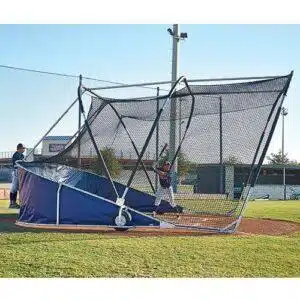
Split-finger fastball – Strictly an out pitch. Dives down hard at home plate, many times getting missed swings. Its effectiveness often stems from the element of surprise, catching batters off-guard with its late movement. Pitchers can enhance their training by utilizing a versatile baseball pitching screen to simulate game conditions and improve their accuracy. This allows them to refine their split-finger fastball alongside other pitches, making them a more formidable opponent on the mound.
Change-up – Slower than a fastball, but thrown with the same arm action. The arm speed is very important in getting the maximum effectiveness. This pitch helps control bat speed.
Curveball – Most often a strikeout pitch. Dives down as it gets to home plate. Many times the velocity is as effective as the movement, because it’s usually much slower than a fastball.
Slider – In between a fastball and a curveball. It’s harder than a curveball with less downward action. The slider has a smaller break with a tighter spin. Many times you can see a small dot in the baseball as it’s coming toward you.
Knuckleball – A pitch that has very little or no spin. It’s very difficult to control and catch. No one knows what it will do usually, which makes it also hard to hit. A very hard pitch to throw.
Split Finger Fastball or Forkball – Thrown hard while held between the index and middle fingers at varying depths. Usually tumbles and drops violently, often diagonally. Known as an out pitch, but also can be hard on the arm.
Chris Cumberland has been a professional pitcher in the Yankees, Red Sox, Braves, Blue Jays and Padres organizations since 1993. In 2004 he has been invited to Spring Training with the Kansas City Royals, where his father is the Major League pitching coach.Chris is also the pitching instructor for Atlanta-based Visual Sports Imaging, where he uses VSI’s Pro Motion Computerized Video Analysis to ensure maximum pitching effectiveness and safety. Chris can be reached for pitching lessons, clinics & schools by contacting him atwww.peavynet.com or calling 770-642-2338.
1What are the primary baseball pitches and their strategic uses?
The page describes several pitches, including the four-seam fastball for maximum velocity, the two-seam fastball (sinker) for inducing ground balls, and the cut-fastball for jamming hitters. Other pitches like the split-finger fastball, change-up, curveball, slider, and knuckleball each offer unique movements and strategic advantages for controlling bat speed or getting missed swings.
2Which pitches are effective for inducing ground balls or strikeouts?
For inducing ground balls, the two-seam fastball (sinker) is highlighted as a very good pitch due to its sinking action. The curveball is most often described as a strikeout pitch, diving down as it reaches home plate, with its velocity often being as effective as its movement.
3What equipment can help pitchers practice different pitches effectively?
The page mentions that pitchers can enhance their training by utilizing a versatile baseball pitching screen. This equipment helps simulate game conditions and improve accuracy, allowing pitchers to refine various pitches like the split-finger fastball.
4What makes the knuckleball a challenging pitch to master?
The knuckleball is characterized by having very little or no spin, making it extremely difficult to control and catch. Its unpredictable movement also makes it hard to hit, and it is noted as a very hard pitch to throw effectively.

 Chris Cumberland has been a professional pitcher in the Yankees, Red Sox, Braves, Blue Jays and Padres organizations since 1993. In 2004 he has been invited to Spring Training with the Kansas City Royals, where his father is the Major League pitching coach.Chris is also the pitching instructor for Atlanta-based Visual Sports Imaging, where he uses VSI’s Pro Motion Computerized Video Analysis to ensure maximum pitching effectiveness and safety. Chris can be reached for pitching lessons, clinics & schools by contacting him at
 Team Quality Baseball Sock Net Makes An Instant Batting Station!$420.00
 The Original Pitchers Pocket Pitching Target With Team Color Pro Padding!Original price was: $359.00.$324.95Current price is: $324.95.
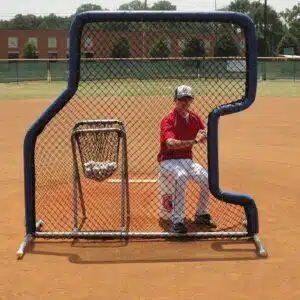
 Compact 5′ x 7′ Pro L Screen With Wheels & Padding | Heavy #60 NetOriginal price was: $790.00.$720.00Current price is: $720.00.