“Have you ever thrown the ball so hard that the umpire said JEEZ, that’s so hard I’m going to give you two strikes?” I asked the soon to be first round draft pick.
Baseballtips.com advocates for a pitching philosophy where pitchers prioritize throwing consistent strikes and hitting specific spots over solely aiming for strikeouts. This strategy helps pitchers induce weak contact early in the count, dictating the game's tempo and keeping batters off balance. For instance, even a high-velocity pitcher, such as one throwing 94 mph, must master throwing strikes at their maximum velocity to be truly effective. By focusing on control, pitchers can become more popular teammates and more successful on the mound, as their job is to get batters out efficiently rather than just striking them out.
“Then you can’t strike anyone out until you have two strikes. Is it possible to get someone out on the first strike? No, not for you, because you won’t let anyone hit it! All you do is walk batters or strike them out! Everyone hates you on the team because scouts are here and they don’t get to do anything! I’m going to make you the most popular pitcher on the team. The next time you strike a batter out, I’m going to take you out of the game!”
Sometimes you have to resort to drastic measures to make a point to some players, particularly if they are a left-handed pitcher that throws 94. Players that are put on the mound must understand that they MUST throw strikes and to be a pitcher they must hit spots. My own son at age 12 was hugely offended if a batter so much as hit a foul off him, but was unaffected if he happened to walk 5 in an inning.
Control can be learned between starts, in bullpen sessions. During these pen sessions, a pitcher will throw a predetermined number of pitches. For a 12-year old this might be 35, for a high school pitcher 45 pitches.
The pitcher should be focused on making each delivery with perfect mechanics. He should be throwing smoothly at only 75% velocity. He might throw 5 pitches at a spot down and away in the strike zone, the next 5 to a spot up and in tight in the strike zone. He should go through all his pitches, concentrating on hitting particular spots repeatedly. Only on the last 5 pitches should he throw with max velocity and these also should be delivered to a predetermined spot in the strike zone.
He must come to understand that the maximum velocity he can throw the ball is that at which he can throw consistent strikes and hit spots. It matters not how hard he can throw if he can not throw strikes at that velocity.
A pitcher must understand his job is to induce the batter to hit a nice weak two hopper to the shortstop, preferably as early in the count as possible. Just as a good hitter is trying to get the pitcher into counts where the pitcher must challenge the batter with a pitch in the center of the plate, the pitcher wants to induce the batter to swing and hit a pitch early in the count that the batter has a low probability of driving for a hit.
If the pitcher gets ahead in the count early, he can continue to throw all his repertory of pitches and not have to challenge the hitters and if he gets two strikes then he can try to strike him out. When a pitcher is in control, he can dictate the tempo of the game and keep the hitters off balance, making it harder for them to settle into a rhythm. In this advantageous position, hitters must adjust their approach and implement effective hitting strategies for clutch moments, focusing on making solid contact rather than just swinging for power. This tactical shift can be the difference between a strikeout and a game-changing hit, emphasizing the importance of strategy at the plate.
Pitchers that refuse to throw strikes are gutless or stupid or both.
|
Bruce Lambin raised and coached two talented T-Ball players who became the best baseball players they could be. His oldest played at Texas while his youngest was the shortstop for Louisiana-Lafayette. Both later played with Team USA. Bruce has coached over 150 pro and college prospects (including six Major Leaguers) and continually shows a keen eye for many overlooked aspects of the game.Lambin is a CABA world champion baseball coach and he wrote a book, A Parent’s Guide to Baseball – Surviving and Thriving Youth League to College, that gives parents an inside look at baseball from youth league to college. |
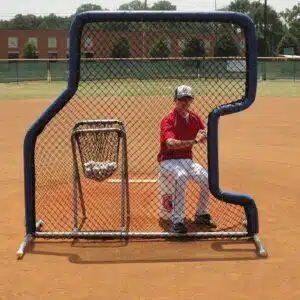
 L Screen | 7′ x 7′ Team Model | Optional Wheels & PaddingPrice range: $390.00 through $640.00
 100 Gallon Rechargeable Football Hydration Station | Made In USA & New Low Price!$5,690.00