Shortstop is the most demanding position on the field, requiring elite footwork, range, arm strength, and baseball IQ. This guide covers proper positioning in every game situation, proven drills to improve first-step quickness and hands, common mistakes shortstops make (and how to fix them), mental preparation, and age-appropriate training schedules. You’ll also learn which equipment actually matters for shortstop development and how to train like next-level players.
Playing shortstop is the most demanding position on the baseball field. You need range, a strong arm, soft hands, quick feet, and the mental toughness to handle 150+ chances per season. Miss one ground ball and the game can slip away.
If you want to play shortstop at the next level, you need more than natural talent. You need the right technique, consistent training, and an understanding of every situation that comes your way.
This baseball shortstop guide covers everything a shortstop needs to know, from positioning and footwork to the shortstop training drills that actually work.
Table of Contents
🧤 What Makes a Great Shortstop?
Before we get into the details, let’s talk about what separates an average shortstop from an elite one.
Physical tools matter:
Quick first step
Strong, accurate arm
Soft hands
Range to both sides
Speed (6.8 60-yard dash or better for college)
Mental skills matter just as much:
Anticipation (reading swings before contact)
Communication (directing the entire infield)
Composure (shaking off errors immediately)
Baseball IQ (knowing situations before they happen)
What separates elite shortstops:
Exceptional first-step quickness
Ability to throw from multiple arm angles
Anticipation before the ball is hit
Range to both sides (especially up the middle)
Consistent double-play feeds and turns
Leadership in the infield
If your shortstop can’t do these things, you’re playing defense with a liability instead of an asset.
📍 Shortstop Positioning: Where to Stand for Every Situation
⚾ Base Positioning (No Runners On)
Your starting position depends on the hitter, count, and game situation. Here’s where most shortstops should set up:
Standard depth: 12–15 feet behind the baseline, halfway between second and third base
Key shortstop positioning rules:
Deeper for power hitters (15–18 feet back)
Shallow for contact hitters or late-game situations (8–10 feet back)
Shade toward the hole against pull hitters
Cheat up the middle against opposite-field hitters
Adjust based on pitcher velocity (slower pitchers = play deeper)
Pre-pitch stance:
Feet slightly wider than shoulder-width
Weight on balls of feet
Hands resting on knees
Eyes on the pitcher’s release point
Ready position (as pitcher delivers):
Hands move to waist level
Slight forward lean
Mini-hop or shuffle step as ball crosses plate
Weight shifts forward, ready to explode
🏃 Positioning With Runners On Base
Runner on first (double-play depth):
Move 2–3 steps closer to second base
Stay at normal depth or slightly shallow
Be ready to cover second on steal attempts
Runner on second:
Play at normal depth unless bunt is possible
Communicate with second baseman on who covers on steal
Runners on first and third:
Middle infield depth for double play
Stay alert for pickoff plays at third
Late innings, tie game, runner on third:
Play in (6–8 feet back) to cut off run at plate
Charge any ball you can to get the force at home
🧭 Shift Positioning
Modern baseball uses defensive shifts more than ever. Your coach may ask you to:
Shift toward first base (against dead-pull lefties):
Play almost at second base
Creates a four-man infield on one side
Requires exceptional range to cover the hole
Shift toward third (against extreme pull righties):
Play closer to normal shortstop depth
Third baseman moves into shortstop zone
You become a “deep shortstop” or shallow left fielder
The key: Trust your coach’s positioning, but stay alert. Shifts work on averages, but any individual hitter can beat them.
🧢 Essential Shortstop Responsibilities
⚾ Primary Defensive Duties
Field ground balls in your zone
Anything hit between second and third base
Balls in the hole (between short and third)
Slow rollers up the middle
Cover second base:
On steal attempts (when second baseman takes the ball)
On balls hit to right side of infield
As cutoff man on throws from right field
Turn double plays:
Receive feeds from second base, third base, pitcher
Make pivot at second base on feeds from first or second baseman
Execute 6-4-3, 6-3, and 6-3-1 double plays
Be the cutoff man:
Relay throws from left-center field
Line up throws to third or home
Call pop-ups in shallow outfield:
Take all fly balls you can reach
Communicate loudly with outfielders
Back up third base on throws from outfield
🗣️ Communication and Leadership
As shortstop, you’re the quarterback of the infield. Your job includes:
Calling defensive adjustments between pitches
Directing infielders on where to play
Taking charge on pop-ups in no-man’s land
Reminding teammates of the game situation
Talking through pickoff plays with pitcher and catcher
If you’re quiet, you’re not doing your job.
⚙️ Shortstop Drills: Build Range, Hands, and Arm Strength
These shortstop drills have worked for every shortstop I’ve coached. Do them consistently and you’ll see results.
🧤 Drill 1: Footwork and First-Step Quickness
The Crossover Step Drill
Setup: Start in ready position, coach or partner 15 feet away with bucket of balls
How it works:
Coach rolls ball to your left
Execute crossover step with right foot
Field ball, plant, throw to first
Return to starting position
Repeat 10 times, then switch to balls rolled right
Why it works: The crossover step is how you cover ground. Most young shortstops don’t cross over properly—they shuffle their feet and lose a full step.
Common mistake: Opening your hips too early. Keep your shoulders square to the target as long as possible.
⚾ Drill 2: Bare-Hand Ground Balls
Setup: Coach hits or rolls slow ground balls, shortstop starts at normal depth
How it works:
Charge the slow roller aggressively
Field with bare hand while glove hand stays up for balance
Grip across the seams
Make strong throw to first from whatever arm angle works
Why it works: Builds confidence fielding tough plays and improves hand-eye coordination
Pro tip: Use this drill in the batting turtle between rounds of BP. Just hit slow rollers and have your shortstop work on bare-hand plays.
🔁 Drill 3: Double-Play Feeds to Second Base
Setup: First baseman, shortstop, second baseman in position. Coach hits ground balls to shortstop.
How it works:
Field ground ball
Take shuffle step toward second base
Make chest-high throw to second baseman’s glove side
Aim for the bag, not the player
Second baseman completes turn and throws to first
Why it works: Repetition builds muscle memory for the 6-4-3 double play, the most common DP in baseball.
Key coaching point: The feed is more important than the turn. A good feed makes an average second baseman look great. A bad feed makes a great second baseman look lost.
🧤 Drill 4: Backhand Technique
Setup: Coach stands 20 feet away, hits or rolls balls to shortstop’s right
How it works:
Read the ball early, break right
Field with glove-side foot forward
Keep glove low, backhand angle
Catch ball out in front
Plant back foot, throw across body to first
Why it works: The backhand is the hardest play for shortstops. Most errors happen because players try to get in front of balls they should backhand.
When to backhand: Anytime the ball takes you 3+ steps to your right. Don’t try to get in front—you’ll be off-balance and late.
🎾 Drill 5: Reaction Ball Drill
Setup: Use a reaction ball (uneven surface) or tennis ball. Shortstop 10 feet from wall or partner.
How it works:
Coach throws tennis balls at different angles and heights
Shortstop reacts and catches with bare hands
30 seconds on, 30 seconds rest
Repeat for 3–5 rounds
Why it works: Tennis balls force you to track and react quickly. Develops soft hands and quick reactions.
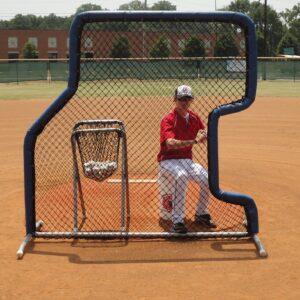
Pro version: Perform this drill with a partner while using a protective L-screen if you want to improve reaction times and confidence catching line drives.
🧰 Equipment Recommendations for Shortstop Training
After 25 years of equipping programs, here are the major pieces that actually matter:
⚾ For Team Training
Multiple protective screens: Run multiple infield stations simultaneously. While one group works on double plays, another works on slow rollers, another on backhand plays.
See Our Screens
Ball carts: Two pro ball carts holding 300 baseballs means you’re not wasting practice time chasing balls or shagging. Keep the reps going by filling one while draining the other. Rotate or save even more practice time by adding a third ball cart.
Our Ball Cart
Batting turtle or portable cage:
Please tell me your school has a baseball turtle, though some might call it a rolling BP cage or portable batting cage or some other obscure descriptive name.
Our Batting Turtles
Quality turf mats: For year-round training, BP and fungo hitters need a pro-turf hitting mat that provides a consistent surface to hit and field ground balls without tearing up any coach’s infield.
Our Turf Mats
Flat weighted bases: Cheap enough and easy to transport. Drill one player anywhere or work in more than one infielder. They don’t easily slide, and the best are made of weatherproof, solid rubber, so they will last for years.
Our Bases
Pancake gloves: Yeah, buddy! You have got to have one of these! Get real leather and get your name and cell number permanently marked on it (they tend to disappear easily). Remember what you call infielders with slow hands and feet… OUTFIELDERS!
Get quick or get gone!
❌ Common Shortstop Mistakes and How to Fix Them
Mistake 1: Playing Too Upright
What it looks like: Shortstop stands too tall in the ready position and gets beat on hard ground balls.
Why it happens: Lazy, tired, or trying to look relaxed.
The fix: Ass down, hands out in front. If your coach can push you over from behind, you’re too tall. Get lower.
Mistake 2: Not Getting to Set Position
What it looks like: Flat-footed when the ball is hit, slow first step.
Why it happens: Not timing the pitcher’s delivery.
The fix: Use a hop or shuffle step as the ball crosses the plate. This loads your legs and prepares you to explode.
Mistake 3: Fielding the Ball Under Your Body
What it looks like: Glove too close to your feet, ball handcuffed between your legs.
Why it happens: Waiting too long or not attacking the ball.
The fix: Field the ball out in front, preferably off your left foot (for righties). This gives you momentum toward first base and shortens your throw.
Mistake 4: Throwing Off-Balance
What it looks like: Wild throws to first, balls sailing or ending up in the dirt.
Why it happens: Not setting your feet before throwing.
The fix: Plant your back foot, get squared up, and throw. On bang-bang plays, you can throw from different arm angles, but you still need a solid base.
Mistake 5: Not Communicating
What it looks like: Pop-ups drop between fielders, double plays fall apart, confusion on who covers second.
Why it happens: Shy, unsure, or lazy.
The fix: Talk before every pitch. Call every ball in the air. Be the loudest player on the field.
🧠 Mental Preparation: Think Like a Shortstop
Being ready physically is only half the job. The best shortstops think three pitches ahead.
Before Each Pitch, Ask Yourself:
Where am I playing this hitter?
What’s the count and situation?
If the ball is hit to me, where am I throwing?
What’s my backup responsibility?
Who’s covering second on a steal?
If you can’t answer these in two seconds, you’re not ready.
🎯 During At-Bats
Watch the hitter’s warm-up swings
Note their stance and bat angle
Adjust your position based on what you see
Communicate adjustments to your second and third basemen
🔁 Between Innings
Review any mistakes
Ask your pitcher what they’re throwing
Remind infielders of the score, outs, and situation
📅 Training Schedule for Shortstops – Temper This by Age!
This is what I recommend for serious players trying to get to the next level.
Off-Season (November – January)
3–4 days per week:
Footwork drills: 15 minutes
Hands and fielding: 20 minutes
Arm strength program: 15 minutes
Hitting: 30 minutes (in batting turtle or cage)
Strength training: 30 minutes
Focus areas: Build arm strength, improve first-step quickness, work on hitting.
Pre-Season (February – March) – Keep It Fun & Age Appropriate
4–5 days per week:
Full infield work: 30 minutes
Double-play drills: 15 minutes
Live at-bats: 20 minutes
Situational defense: 20 minutes
Speed and agility: 15 minutes
Focus areas: Game-situation reps, communication, building chemistry with your middle infield partner.
In-Season (April – July)
Daily:
Pre-game infield: 15 minutes
Defensive drills: 10 minutes
Hitting: As needed
Post-game evaluation: 5 minutes
Focus areas: Maintain skills, stay sharp, review game situations.
❓ Frequently Asked Questions
Q: What’s the best glove size for shortstop?
A: 11.5 to 11.75 inches for high school and above. Anything bigger slows you down. You need a glove that closes quickly and doesn’t fight you on transfers. Players with exceptional hands can use a 12-inch glove, but think carefully before going bigger.
Q: How often should shortstops practice?
A: Daily during the season. Three to four times per week in the off-season. Quality over quantity, but you need consistent reps to maintain range and arm strength.
Q: What’s a good 60-yard dash time for shortstops?
A: High school: 7.0 seconds or better. College: 6.8 or better. Pro prospects: 6.6 or better.
Q: Should shortstops wear sunglasses?
A: Yes—especially for day games. Pop-ups in the sun are impossible without protection. Get sport sunglasses with proper UV protection.
Q: How do I improve my arm strength?
A: Long toss three to four times per week, a weighted ball program (carefully and informed before beginning anything weighted), and proper throwing mechanics. Most “weak arms” are mechanical issues, not strength issues. Long toss builds bullets and should be part of every player’s training, in my humble opinion.
BTW: JaegerSports.com has the best long-toss program I’ve ever seen. You’ve used their awesome bands—but have you used their program?
Q: What’s the most important skill for a shortstop?
A: First-step quickness. You can teach quick hands and arm accuracy. You can’t teach that explosive first step. It’s learned and earned on the field.
🏁 Building a Complete Shortstop: Final Thoughts
I’ve coached shortstops who made it to pro ball and shortstops who rode the bench in high school. The difference wasn’t always talent—it was preparation, consistency, and commitment to the details.
Every ground ball you field in practice matters.
Every throw you make to first base matters.
Every mental rep you take between pitches matters.
If you want to play shortstop at the next level, start working today. Get in the cage. Work on your footwork. Study the game. Ask questions. Stay late. Come early.
The position demands excellence. Are you willing to give it?
Need equipment to train like the pros? Check out our complete line of batting turtles, portable mounds, L-screens, and field equipment at BaseballTips.com. We’ve been helping players get better since 1999.
Questions about shortstop training or need advice on equipment? Call us at 1-800-487-7432 (M–F, 10 AM–7 PM EST). We’re ex-coaches and players who continue to learn—and actually know some stuff.
⚾ For Individual Training – Get in the Cage and Learn to Throw Into It Too!
If you’re serious about becoming an elite shortstop, you need reps—lots of them.
A portable batting turtle lets you get hundreds of swings in a shorter time, so find a machine or BP pitcher and make those extra swings happen.
Why this matters for shortstops:
You can’t be a liability at the plate. The best shortstops hit .280+ with gap power. More slug, and teams can live with lower averages.
If you play this game long enough, you’ll find that even the best glove-first players have to hit to keep playing. The road is littered with elite shortstops whose journey ended earlier than expected.
If you can hit, you can play. It may not be fair, but it’s how baseball is played at the highest levels.
So… who really wants it?
School work, as always, is #1 (grades open doors to more colleges, right?).
Baseball, for the serious athlete, should be #2.
Now it comes down to 2A and 2B—you always want to be league average or better and grow into a dangerous hitter.
All while staking your claim at the most athletic position on the field… shortstop.
No one said it would be easy—but how much fun can you have along the way? Have a blast, don’t stress the wins and losses, get quick, and grow with players who share your dream. You are building a life for yourself, no matter when you play your last game—and we all do.